
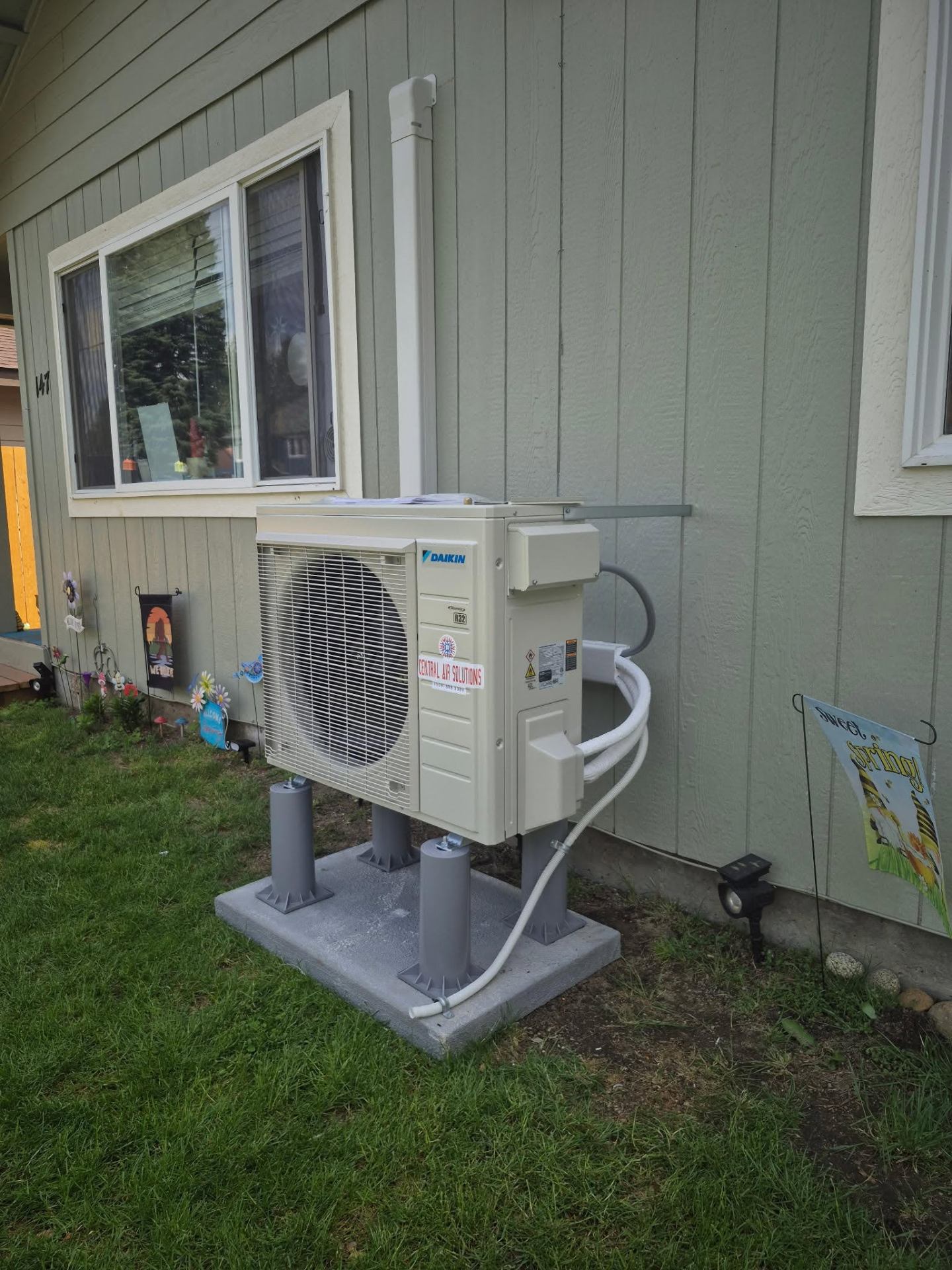
A furnace works about half the year. A heat pump works all of it. That single difference is why heat pump maintenance matters more than people expect, and why the systems we see fail early are almost always the ones nobody touched for six years.
None of this is complicated. Here is the schedule, split into what you can do yourself and what actually requires gauges and a meter.
Monthly: five minutes, no tools
- Check the air filter. Replace it when it looks loaded, which in most valley homes means every one to three months. Pets, dirt roads, orchard dust, and wildfire smoke season all shorten that interval.
- Walk out to the outdoor unit and clear anything within two feet: leaves, grass clippings, cottonwood fluff, weeds, patio furniture, and anything stacked against it.
- Listen. A heat pump has a normal sound. Grinding, screeching, rattling, or a hard buzzing at startup is new information worth a phone call.
- Look at your registers. If airflow has dropped noticeably, something is restricting it.
The filter is not a minor item. Restricted airflow is the root cause of a large share of the compressor and coil failures we diagnose, and it is the cheapest thing on this entire page to get right.
Seasonally: before you switch modes
Early spring, before cooling season
- Rinse the outdoor coil with a garden hose from the inside out, gently, with the power off at the disconnect. No pressure washer, the fins bend.
- Confirm the condensate drain is running clear and the area around the indoor unit is dry.
- Run the system in cooling for a full cycle on a warm day rather than discovering a problem during the first 100 degree week.
Early fall, before heating season
- Clear the outdoor unit again after leaf drop, and make sure snow melt and roof runoff are not going to pour onto it.
- Verify the unit sits high enough that drifted snow will not bury the coil, and keep the area shoveled through winter.
- Run a full heating cycle early. Also expect the defrost cycle, which briefly makes the outdoor unit steam and the indoor air go cool. That is normal operation, not a failure.
Annually: the professional tune-up
Because a heat pump heats and cools, the ideal rhythm is a professional visit each spring and each fall. At minimum, once a year. Here is what we actually do on that visit, so you know what you are paying for:
- Verify refrigerant charge against manufacturer superheat and subcooling specifications, and investigate any discrepancy as a possible leak.
- Wash the outdoor coil and inspect the indoor coil for buildup.
- Test capacitors, contactors, and relays under load rather than by eye, since these are the parts that strand people.
- Measure motor amp draw and compare it to nameplate values to catch a motor going bad before it quits.
- Inspect and tighten electrical connections and check for heat damage or corrosion.
- Clear and treat the condensate drain and confirm the float switch works.
- Verify defrost operation and reversing valve function, which is heat pump specific and often skipped.
- Measure temperature split and static pressure to confirm the system is actually moving the air it should.
- Check thermostat calibration, staging, and backup heat lockout settings so expensive resistance heat is not running when it does not need to.
See our heat pump installation, service, and replacement work
How maintenance changes lifespan
A maintained heat pump in this climate commonly runs 15 years or more. A neglected one frequently gives out closer to 10, and the failure is usually the compressor, which is the single most expensive component in the system. The mechanism is not mysterious: dirty coils and restricted airflow force the compressor to work outside its design envelope, and it wears accordingly.
Efficiency drifts the same way. A coil packed with debris and a charge that is off spec do not announce themselves, they just quietly raise what you pay every month for the same comfort.
How maintenance affects your warranty
Nearly every manufacturer warranty requires the equipment to be installed by a licensed contractor, registered within a set window after installation, and maintained per the manufacturer's instructions. Denied warranty claims usually come down to one of three things: unregistered equipment, no documented maintenance, or damage traced to neglect such as a filter that was never changed.
Keep your invoices. Register the equipment, or make sure whoever installed it did. Ask for documentation of each maintenance visit. It costs nothing and it is the difference between a covered compressor and a very bad afternoon.
What to skip
Do not cover the outdoor unit for winter. A heat pump needs it for heating, and a wrapped unit traps moisture and invites rodents. Do not add refrigerant as routine maintenance, because a correctly charged sealed system does not consume it. And do not shut the system off entirely in mild weather thinking you are saving it; steady operation is easier on equipment than long idle periods followed by hard starts.
If you are not sure when your system was last serviced properly, that is answer enough. Call (509) 888-3389 or request service and we will get it on the schedule, tell you what we find, and tell you honestly if it does not need anything.