
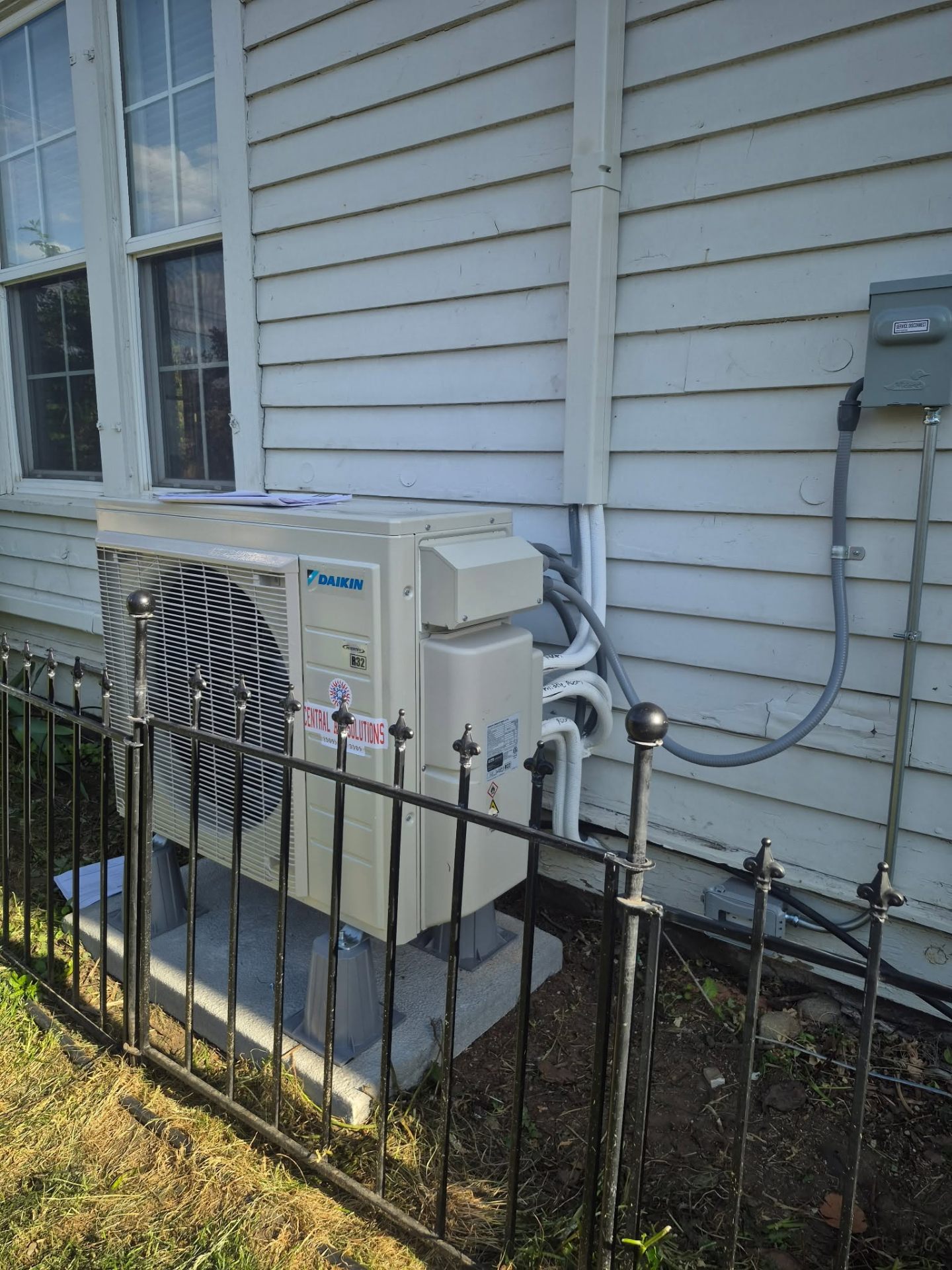
This is the question we get asked more than any other. A homeowner is staring down a dying furnace or a house full of baseboard heaters, and somebody has told them heat pumps are the future while somebody else has told them heat pumps do not work when it gets cold. Both of those people are partly right, and the real answer depends on your house.
Here is how we think about it after installing both across Wenatchee, East Wenatchee, Cashmere, Leavenworth, Quincy, and now Cle Elum.
How a furnace heats your home
A furnace makes heat. It burns natural gas or propane, or in an electric furnace it runs current through resistance coils, and a blower pushes that warmed air through your ducts. It is simple, it is proven, and it produces very hot supply air, which is why furnace heat feels like a blast when it kicks on and then goes quiet until the house cools again.
The downside is that a furnace only heats. In July it is dead weight sitting next to your air conditioner, and everything it makes has to be created from fuel or electricity at the moment you need it.
How a heat pump heats your home
A heat pump does not make heat, it moves heat. Even air that feels freezing to you still holds usable heat energy, and the refrigeration cycle concentrates it and delivers it indoors. In summer the same system reverses and moves heat out of your house instead. One piece of equipment, both seasons.
Because moving heat takes far less energy than creating it, a modern heat pump delivers two to four units of heat for every unit of electricity it consumes. Electric resistance heat, by definition, can never beat one for one. That gap is the entire reason utilities pay people to switch.
But does a heat pump work in a valley winter?
Yes, when it is the right model, sized correctly, and installed correctly. Those three conditions carry a lot of weight, so let us be specific.
The heat pumps that earned the old reputation for quitting in the cold were single stage units built for mild climates. They lost capacity fast below freezing and handed the job over to backup electric heat strips, which is exactly the expensive resistance heat the homeowner was trying to get away from.
Cold-climate inverter heat pumps are a different animal. They modulate compressor speed instead of cycling on and off, and the better models hold full rated heating capacity down into the single digits and keep producing useful heat below zero. We install these in Leavenworth cabins and up around Stevens Pass, where the weather does not care about marketing claims.
The comfort difference nobody mentions
Furnaces heat in bursts. Heat pumps run long, low, and steady. Most people describe the result as fewer cold spots, less temperature swing between the thermostat kicking on and off, and much quieter operation. Continuous low-speed airflow also filters more air over the course of a day, which matters in a valley that gets wildfire smoke in August and inversion haze in January.
On the other hand, heat pump supply air is warm rather than hot. If you are used to standing over a furnace register, that takes a week to adjust to. It is not a defect, it is how steady-state heating feels.
Where heat pumps clearly win
- Homes heated with electric baseboards, wall heaters, ceiling cable, or an electric furnace. This is the biggest comfort and operating-cost upgrade available to a valley homeowner.
- Homes with no air conditioning that want cooling anyway, since one system covers both seasons instead of two.
- Homes where a rebate is on the table for converting away from electric resistance heat.
- Cabins, additions, shops, and older homes without ductwork, which are natural fits for ductless systems.
Where a furnace still makes sense
- Homes with existing natural gas service, good ductwork, and a furnace that only needs replacing rather than rethinking.
- Homeowners who specifically want that hot-air feel and have no interest in changing how their heat behaves.
- Situations where electrical service or panel capacity makes a full conversion impractical right now.
There is also the middle path we install regularly: a heat pump paired with a gas furnace as backup, often called a dual fuel or hybrid system. The heat pump handles the vast majority of the season efficiently, and the furnace takes over on the coldest nights. You get heat pump economy most of the time and furnace muscle when the valley bottoms out.
How to actually decide
- 01
Start with how you heat today
Electric resistance heat points strongly toward a heat pump, and it is also what utility conversion programs are built around. Existing gas points toward a straight replacement or a hybrid.
- 02
Ask whether you want cooling
If you would like air conditioning that you do not have, a heat pump gets you there without buying two machines.
- 03
Get a real load calculation
Square footage rules of thumb oversize equipment and cause short cycling, humidity problems, and premature failure. We measure the house.
- 04
Check what your utility will pay
Program eligibility depends on your current permanently installed heating type and your utility, and it can change what the decision looks like.
See current utility rebate details for heat pump conversions
We do not have a favorite answer we push on every house. Some homes get a furnace, some get a heat pump, some get both, and we say so in writing before any work starts. If you want a straight recommendation for your specific house, call (509) 888-3389 or request a free estimate and we will walk it with you.