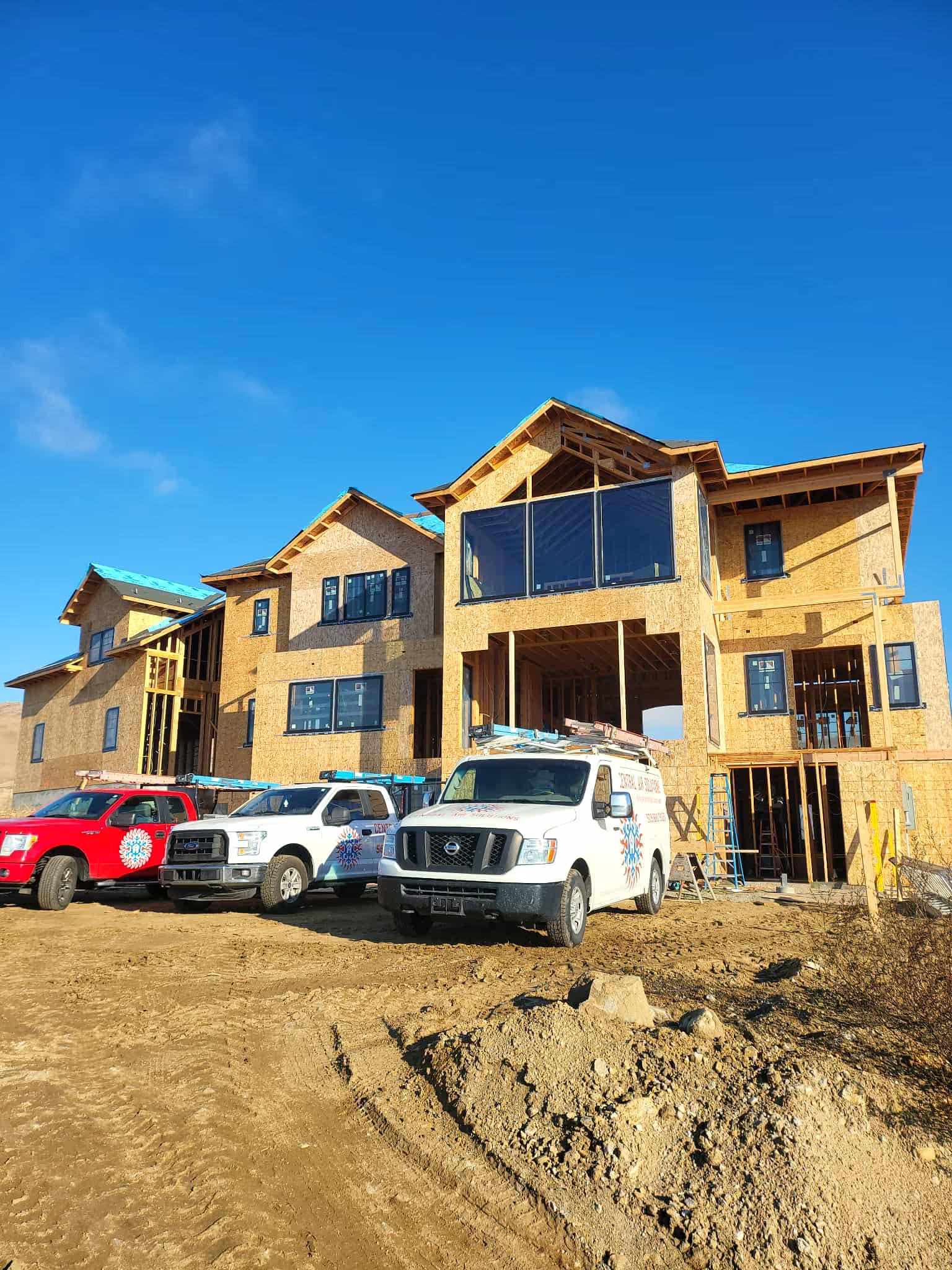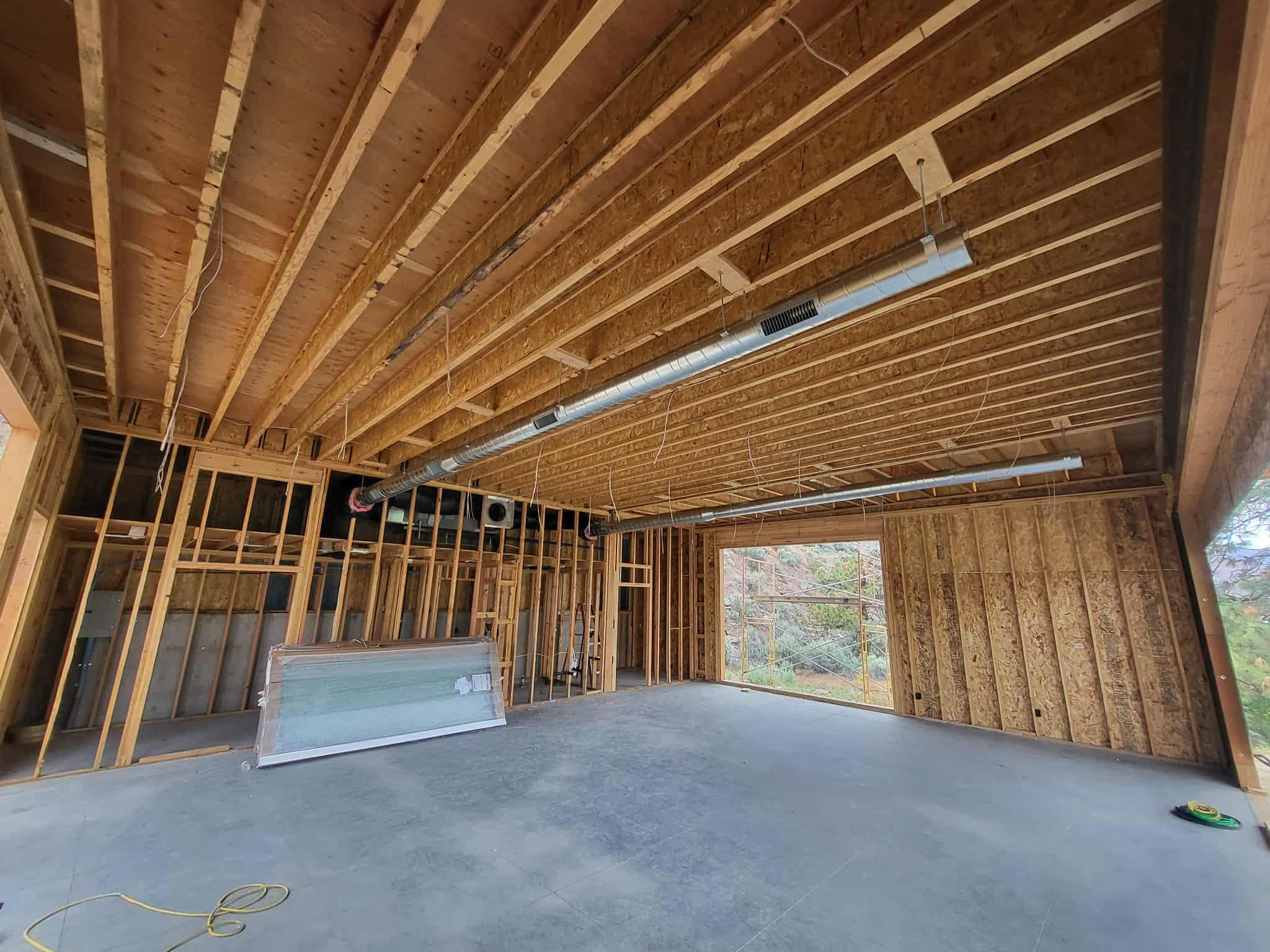
New Construction in Wenatchee, WA
We not only offer our services to residential customers, but we specialize in new construction. Take a look at some of our work and give us a call!
Scroll down to discover more

Build Your New Home with Comfort Designed In From the Ground Up
Building a new home or commercial property in Wenatchee, WA, presents you with the ideal opportunity to design an HVAC system perfectly tailored to your needs. This process starts with Central Air Solutions providing accurate site and load assessments, and continues through system design, expert installation, securing all necessary permitting, final commissioning, and guaranteed ongoing maintenance. You will see firsthand how local climate factors and rigorous code requirements shape our critical system decisions. Ultimately, a carefully planned HVAC system ensures your new property benefits from superior comfort, peak efficiency, exceptional indoor air quality, and guaranteed long-term reliability.

Why HVAC planning matters for new construction in Wenatchee, WA
Wenatchee sits in a high-desert environment on the east side of the Cascade Range. Summers can be hot and dry, winters can be cold with significant temperature swings between day and night, and the region can be affected by seasonal wildfire smoke. These local factors mean an HVAC system must handle both strong cooling demands and reliable heating, deliver effective humidity and ventilation control, and include filtration strategies for air quality events. Planning HVAC early in the construction process gives you:
- A system sized correctly for the actual building load rather than rule-of-thumb estimates.
- Ductwork and equipment placement that integrate with the architectural and mechanical plans.
- Better energy efficiency and lower operating costs over the life of the building.
- Improved indoor air quality through proper ventilation and filtration choices.
- A smoother permitting, inspection, and commissioning process.
Central Air Solutions focuses on these outcomes for new construction projects in Wenatchee, tailoring designs to local climate, building orientation, insulation levels, and client priorities.
Common HVAC scopes for new construction projects in Wenatchee
New construction HVAC work can vary depending on building type, budget, and performance goals. Typical scopes include:
- Initial site and load assessments including Manual J calculations.
- System selection: split systems, heat pumps (air-source or ground-source), high-efficiency furnaces, ductless mini-splits, or hybrid systems.
- Ductwork planning and Manual D design, including return placement and balancing.
- Ventilation strategies: energy recovery ventilators (ERVs) or heat recovery ventilators (HRVs).
- Zoning and controls: multiple zones, dampers, and smart thermostats for precise comfort and energy savings.
- Filtration and indoor air quality solutions for wildfire smoke and allergens.
- Integration with building automation for commercial projects.
- Permit application support and code compliance review specific to Washington State and Chelan County.
- Commissioning, testing, training, and warranty documentation.
- Post-installation maintenance plans and service guarantees.
Initial site assessment and accurate load calculations
Accurate load calculations are the foundation of a successful HVAC design. Central Air Solutions performs site assessments and Manual J calculations that account for:
- Local climate data for Wenatchee including temperature extremes and seasonal patterns.
- Building envelope characteristics: insulation levels, window type, orientation, and air infiltration rates.
- Internal heat gains from appliances, lighting, and occupant schedules.
- Specific usage patterns for rooms or zones, such as home offices, garages, or commercial spaces.
A properly sized system avoids the two most common pitfalls: oversized equipment that cycles frequently and reduces comfort and efficiency, and undersized equipment that cannot maintain temperatures during peak summer or winter conditions.
System design and ductwork planning
Good system design includes more than picking equipment. Duct design, airflow distribution, and equipment placement are crucial to performance.
- Manual D duct design: We size ducts to maintain balanced airflow and minimize pressure losses. Longer runs, tight spaces, and attic or crawlspace placements are addressed with practical routing.
- Return air strategy: Properly located return pathways reduce negative pressure, prevent drafts, and improve indoor air quality by ensuring consistent circulation.
- Supply register placement: Strategic placement prevents hot or cold spots and balances comfort across living areas.
- Acoustic considerations: Equipment, duct sizing, and register selection are planned to reduce noise transmission.
- Serviceability: Equipment access, filter access, and condensate drainage are designed for easy maintenance and long-term reliability.
In Wenatchee, attic insulation and daytime solar gains affect ductwork strategy. Where possible, duct runs are minimized and insulation values are increased to reduce losses in the hot summer months and cold winter nights.
Equipment selection for efficiency and climate suitability
Choosing the right equipment for Wenatchee balances heating and cooling capacity, efficiency ratings, and indoor air quality needs.
- Heat pumps: Modern cold-climate heat pumps perform well in Washington climates, offering efficient heating and cooling with variable-speed compressors. For many new homes in Wenatchee, heat pumps reduce fossil fuel dependency while delivering strong year-round performance.
- High-efficiency furnaces: For projects choosing gas backup or primary heating, high-efficiency furnaces with modulating burners provide comfortable, consistent heat and work well in hybrid systems.
- Air conditioning: Right-sized central air conditioners or ductless systems provide efficient cooling during hot summer months. Variable-speed compressors and two-stage systems offer better humidity control and comfort.
- Ventilation and IAQ: ERVs and HRVs provide balanced ventilation while retaining energy. Whole-house filtration with high MERV filters or optional dedicated filtration systems are recommended for wildfire smoke events and seasonal allergens.
- Smart controls and zoning: Programmable and learning thermostats, zone dampers, and occupancy sensors improve comfort and reduce energy use.
Equipment selection is guided by Manual S equipment selection practices and by local code and utility incentives where applicable.
Coordination with builders, subcontractors, and the construction schedule
Successful new construction HVAC work requires close coordination with builders, framers, electricians, plumbers, and inspectors. Central Air Solutions integrates HVAC planning into the construction timeline by:
- Providing detailed mechanical plans and equipment rough-in locations for framing and plumbing stages.
- Aligning duct and equipment installation with drywall, insulation, and roofing schedules to avoid rework.
- Coordinating electrical and condensate drain routing with electricians and plumbers.
- Communicating timeline milestones so HVAC work supports, rather than delays, other trades.
- Participating in pre-construction planning meetings to identify site constraints early.
Early coordination preserves architectural intent, reduces change orders, and ensures systems are installed per design, not as an afterthought.
Permitting and code compliance in Wenatchee and Washington State
Navigating permits and code compliance is an important part of new construction HVAC work. Central Air Solutions prepares permit-ready documentation and handles many interactions with local authorities. Key code-related items include:
- Compliance with Washington State energy code and local amendments that affect efficiency, ventilation, and equipment installation.
- Proper combustion air provision and venting for combustion appliances where applicable.
- Duct sealing and insulation standards that reduce energy loss.
- Mechanical and electrical permit requirements for equipment installation and controls.
- Inspection coordination and documentation for passing local municipal inspections.
Addressing code requirements during the design phase prevents delays during inspections and helps ensure systems operate safely and efficiently.
Installation timeline and project milestones
While timelines depend on project size, scope, and site conditions, a typical new construction HVAC project includes these milestones:
- Pre-construction meeting and site assessment.
- Load calculations, schematic design, and equipment selection.
- Permit submission and approval.
- Rough-in stage: duct runs, plenums, and equipment pads installed prior to drywall.
- Equipment set and final connections after rough-ins are inspected.
- Commissioning and performance testing once building envelope and systems are complete.
- Final inspection and signoff, including delivery of warranty documentation and operating manuals.
- Handover and system orientation with property owners or facility managers.
Central Air Solutions plans milestones to align with builder schedules and to ensure efficient sequencing of work. Contingencies are included to handle weather impacts or schedule changes common in real-world projects.
Commissioning, warranty, and handover procedures
Commissioning is the quality assurance step that verifies systems are installed and performing as designed. Central Air Solutions follows a structured commissioning process that includes:
- Startup procedures and manufacturer-recommended initial checks.
- Airflow verification and duct balancing to ensure distribution meets design targets.
- Refrigerant and oil charge verification for HVAC equipment.
- Combustion safety testing for fuel-fired equipment if present.
- Thermostat calibration and control logic verification.
- Filtration and ventilation flow testing to confirm indoor air quality targets.
After commissioning, detailed documentation is provided including equipment specifications, warranty information, maintenance schedules, and system manuals. Handover includes a walk-through with the owner or facility manager to explain operation, maintenance points, and warranty coverage.
Warranty management is handled through accurate record-keeping and coordination with manufacturers. Central Air Solutions documents warranty start dates and presents care instructions to avoid voiding coverage.
Post-installation testing and performance verification
Testing after installation ensures systems handle real-world conditions. Typical post-installation checks include:
- Seasonal performance checks for heating and cooling capacity.
- Humidity control verification, especially for buildings with tight envelopes.
- Ventilation performance and indoor air quality measurements.
- Energy use benchmarking to confirm expected efficiency.
- Leak checks for refrigerant and duct tightness.
For commercial projects, testing may include load bank testing or system integration checks with building automation. For residential projects, a post-occupancy performance review identifies potential tweaks to improve comfort and efficiency.
Maintenance plans and long-term service guarantees
Regular maintenance is essential to protect performance, efficiency, and warranty coverage. Maintenance plans available for new construction projects typically include:
- Annual or semi-annual tune-ups for heating and cooling systems.
- Filter replacement schedules and recommendations based on occupancy and local air quality.
- Duct inspections and cleaning procedures if needed.
- Priority scheduling and documented service history for warranty claims.
- Seasonal checks timed before heavy-use periods like summer cooling and winter heating seasons.
Maintenance plans extend equipment life, maintain efficiency, and reduce the risk of mid-season failures. In Wenatchee, maintenance visits timed before wildfire season and winter extremes can be especially beneficial.
Indoor air quality and wildfire readiness
Wenatchee can experience poor outdoor air quality during wildfire events. For new construction, integrating indoor air quality measures offers both comfort and health benefits:
- Whole-house filtration systems with high MERV ratings to reduce particulate intrusion during smoke events.
- Positive pressure strategies and controlled ventilation during outdoor air quality incidents.
- Dedicated filtration or clean-air zones for occupants with respiratory concerns.
- Sealed and insulated duct systems to reduce infiltration of outdoor pollutants.
- Advice on portable air cleaners for temporary events or specific rooms.
Designing IAQ into new construction is more effective and less costly than retrofitting later.
Energy efficiency and incentive awareness
Energy efficiency is a key driver in new construction HVAC design. High-performance systems reduce operating costs and environmental impact. Strategies include:
- High-efficiency heat pumps or furnaces with variable-speed drives.
- Properly sized equipment and ductwork to avoid short-cycling.
- Heat recovery ventilation to provide fresh air with minimal energy penalty.
- Zoning and smart controls for targeted heating and cooling.
- Building envelope recommendations to reduce HVAC load.
Central Air Solutions is familiar with state and utility incentive programs that may apply to efficient equipment and construction practices. Incorporating efficiency during design ensures compliance with energy codes and maximizes potential incentives.
Common issues in new construction HVAC projects and how we prevent them
New construction projects can encounter predictable problems. Understanding common issues helps prevent them:
- Oversized equipment: Avoided by accurate Manual J sizing and realistic occupancy assumptions.
- Poor duct routing: Prevented with early coordination and Manual D planning.
- Inadequate ventilation: Addressed by balancing code-required ventilation with ERV/HRV design.
- Accessibility problems: Avoided by planning for service clearances and maintenance access during design.
- Combustion air and venting errors: Managed by following code and manufacturer guidance.
- Delays from permit issues: Minimized by preparing thorough permit-ready documentation and early submission.
Proactive design and clear communication among trades reduce rework and improve overall project quality.
Benefits of professional new construction HVAC design in Wenatchee
Choosing a professional approach to HVAC for new construction yields measurable benefits:
- Improved comfort year-round in Wenatchee’s hot summers and cold winters.
- Reduced operating costs through efficient equipment and tight ductwork.
- Better indoor air quality during wildfire season and allergy periods.
- Longer equipment life and preserved manufacturer warranties.
- Easier inspections and faster permit approvals with correct documentation.
- Smooth coordination with builders and fewer construction delays.
Central Air Solutions brings local knowledge and technical expertise that translates into a system designed for performance and longevity.
How to evaluate HVAC proposals for new construction
When comparing HVAC proposals for a new build in Wenatchee, consider these elements rather than price alone:
- Detailed load calculations and engineering documentation.
- Equipment specifications with efficiency ratings and performance curves.
- Ductwork design drawings and materials listed.
- Ventilation strategy and filtration recommendations.
- Commissioning and testing procedures included in the scope.
- Warranty coverage and how warranty start dates are handled.
- Maintenance plan options and response-time expectations.
- Project timeline with clear milestones and inspection coordination.
Proposals that include these items show a higher level of professionalism and reduce the likelihood of surprises.
FAQs
Q: What is included in a new construction HVAC site and load assessment?
A: A site and load assessment includes Manual J load calculations that account for Wenatchee climate data, building envelope characteristics, occupancy patterns, internal heat gains, window orientation, and insulation levels. This forms the basis for right-sizing heating and cooling equipment and informs ductwork design.
Q: How does the Wenatchee climate influence HVAC choices?
A: Wenatchee experiences hot, dry summers and cold winters with pronounced temperature swings and occasional wildfire smoke. Systems must provide dependable cooling and heating, effective humidity control, and robust filtration. Heat pumps with cold-weather capability, proper insulation, and ERV/HRV ventilation are common responses.
Q: When should HVAC planning happen during the construction schedule?
A: HVAC planning is most effective during early design and pre-construction phases, prior to framing. Early planning allows duct routing, equipment location, and structural considerations to be incorporated into architectural and mechanical plans, minimizing rework.
Q: What is Manual D and why is it important?
A: Manual D is the industry standard for duct design. It ensures ducts are sized and routed to deliver balanced airflow, minimize pressure drops, and maintain comfort. Proper Manual D design reduces energy loss and prevents noise and comfort issues.
Q: What ventilation options are recommended for new homes in Wenatchee?
A: ERVs and HRVs are recommended for balanced ventilation that maintains indoor air quality while conserving energy. In wildfire-prone periods, systems with the ability to recirculate through high-efficiency filtration or be temporarily isolated can help protect occupants.
Q: How do you address wildfire smoke in system design?
A: Whole-house filtration with higher MERV-rated filters, properly sealed duct systems, and the option to increase indoor pressure or reduce outdoor air intake during smoke events are typical strategies. Portable air cleaners can supplement whole-house measures for high-risk periods.
Q: What does commissioning involve and why is it necessary?
A: Commissioning verifies the HVAC system is installed per design and operating correctly. It includes startup checks, airflow balancing, refrigerant and combustion tests, thermostat calibration, and performance verification. Commissioning protects efficiency, comfort, and warranty validity.
Q: How long does a new construction HVAC project typically take?
A: Timelines vary by project size. A residential project commonly follows milestones from design and permits through rough-in and equipment set to final commissioning. Factors such as permitting timelines, weather, and coordination with other trades affect the schedule.
Q: What warranty and maintenance documentation will be provided at handover?
A: Detailed equipment specifications, manufacturer warranty certificates, service start dates, maintenance schedules, and operating manuals are provided at handover. Clear documentation ensures owners know how to maintain systems and how warranty coverage applies.
Q: Can new construction HVAC systems qualify for energy incentives?
A: Many high-efficiency systems and heat pumps may qualify for state or utility incentives. Energy code compliance and equipment efficiency selections influence eligibility. Documentation during design and installation is important for incentive claims.
Promotions
The right choice for all your HVAC needs!
Chelan County PUD
rebates of up to $4,000 for residents that switch from electric forced heat to a heat pump.
*Must present this card at time of estimate. Cannot be combined with other offers. Expires 06/30/2026
Commercial PUD rebates
$3000 per ton when switching from electric heating to heat pump.
*Must present this card at time of estimate. Cannot be combined with other offers. Expires 06/30/2026
Testimonials