
Optimizing HVAC System Design for Peak Energy Performance
Learn why HVAC system design, including load calculation and ductwork, is key to peak energy performance and lasting comfort.

Scroll down to discover more
The Unseen Hero of Energy Savings: Why Your HVAC System Design Matters More Than the Unit Itself
You’re staring at two high-efficiency air conditioners. One has a slightly better energy rating, the other a lower price tag. It feels like a critical decision, but what if I told you you’re focusing on the wrong thing?
The biggest mistake homeowners make is believing the sticker on the box tells the whole story. True, long-term energy performance isn't just about the SEER rating it's about the thoughtful design of the entire system. An ENERGY STAR-certified unit connected to poorly designed ductwork is like putting a V8 engine in a car with flat tires. You have the potential for power, but you’re not going anywhere efficiently.
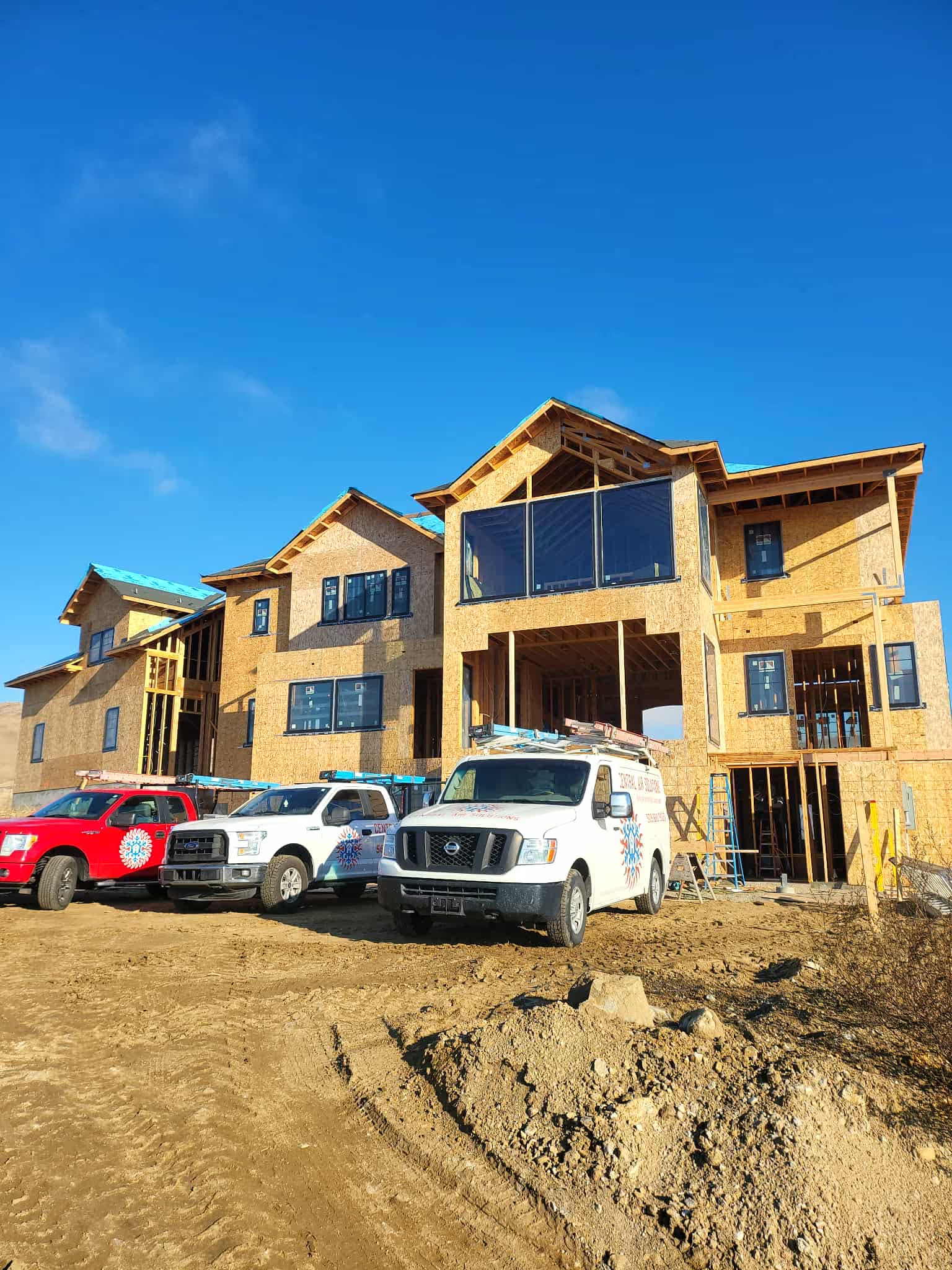
At Central Air Solutions, we've seen it all. We’re a family-owned company that's been inside thousands of homes, and we know that peak performance and real savings come from a holistic approach. It's about designing a system that works in harmony with your home's unique needs.
This guide will walk you through what really matters, moving beyond the marketing hype to the foundational principles that deliver comfort and cut energy bills for years to come.
Decoding HVAC Efficiency: What the Numbers on the Sticker Actually Mean
Before we dive into system design, let's quickly clear up what those efficiency ratings mean. They are important comparison tools, but they’re only part of the puzzle.
- SEER (Seasonal Energy Efficiency Ratio): This measures cooling efficiency over an entire season. The higher the number, the more efficient the unit. The current minimum is 14.5, but high-efficiency models can reach 20 or more.
- EER (Energy Efficiency Ratio): Similar to SEER, but it measures efficiency at a single, specific outdoor temperature (95°F). It’s a good indicator of performance during peak summer heat.
- AFUE (Annual Fuel Utilization Efficiency): This is for furnaces. It tells you what percentage of fuel is converted into usable heat. An AFUE of 95% means 95 cents of every dollar you spend on fuel heats your home, while 5 cents is lost.
- HSPF (Heating Seasonal Performance Factor): This measures a heat pump's heating efficiency. Like SEER, a higher HSPF means better efficiency.
Understanding these terms is the first step. The next is realizing they only measure the unit's potential. Achieving that potential depends entirely on the next section.
The Foundation of Peak Performance: Why a Load Calculation is Non-Negotiable
Here’s the single most important, and most often skipped, step in designing an efficient HVAC system: the Manual J load calculation.
A load calculation is an in-depth engineering analysis that determines the exact amount of heating and cooling your home needs to stay comfortable. It’s not a rule of thumb or a guess based on square footage. A proper Manual J calculation considers dozens of factors:
- The size and orientation of your windows
- Local climate data
- The quality and amount of insulation in your walls and attic
- Air leakage rates
- The number of occupants in your home
- Heat generated by appliances
[Image of a Manual J load calculation report showing various inputs like window size, insulation R-value, and climate zone data.]
Why does this matter so much? Because it dictates the size of the unit you need.
- An oversized unit will cool your home too quickly, leading to short, frequent cycles. This is incredibly inefficient, causes excessive wear and tear, and fails to remove humidity properly, leaving your home feeling cool but clammy.
- An undersized unit will run constantly on the hottest days, struggling to keep up. This wastes energy and puts a massive strain on the components, leading to premature failure and costly HVAC repair services.
Insisting on a Manual J load calculation is your best defense against a costly mistake. It’s the blueprint for an efficient system, and any contractor who skips it isn't focused on your long-term performance.
The Arteries of Your Home: Designing Ductwork for Maximum Airflow
If the HVAC unit is the heart of your system, the ductwork is the circulatory system. Leaky, poorly designed ducts can lose 20-30% of the conditioned air before it ever reaches your rooms, according to ENERGY STAR. That's like throwing away one out of every four dollars you spend on heating and cooling.
[Image of well-sealed vs. leaky ductwork, with one side showing clean, foil-taped joints and the other showing dusty, disconnected ducts with arrows indicating air loss.]
An efficient ductwork design focuses on two things:
- Proper Sizing and Layout: Ducts must be sized to handle the precise airflow from your HVAC unit. A design that minimizes sharp turns and long runs ensures air moves with the least resistance, reducing the strain on your system's blower motor.
- Meticulous Sealing: Every joint and seam in your ductwork needs to be sealed with mastic sealant or specialized foil tape. This prevents conditioned air from leaking into your attic, crawlspace, or walls, ensuring it gets to where you actually want it.
When it’s time for HVAC new installation services, asking a contractor about their approach to duct design and sealing will tell you everything you need to know about their commitment to quality.
Choosing Your Champion: A Data-Driven Comparison of High-Efficiency Systems
Once you have a solid design plan based on a load calculation and smart ductwork strategy, you can confidently choose the right equipment. Here’s a look at the leading options, keeping in mind how they fit into a holistic system design.
[Image comparing different HVAC system types side-by-side, such as a geothermal unit, a ductless mini-split, and a high-efficiency central air conditioner.]
Geothermal Heat Pumps
- How it Works: Uses the stable temperature of the earth to transfer heat. In winter, it pulls heat from the ground into your home; in summer, it pulls heat from your home and deposits it into the ground.
- Pros: The most energy-efficient option available. Geothermal systems can cut energy bills by 30% to 50% compared to conventional systems. They are extremely quiet and have a very long lifespan (25+ years for indoor components, 50+ for underground loops).
- Cons: Higher upfront installation cost due to the need for drilling or excavation for the ground loops.
- Ideal Use Case: Homeowners planning to stay in their property long-term who want the lowest possible energy bills and environmental impact. The significant ROI makes it a powerful investment.
Ductless Mini-Splits
- How it Works: Consists of an outdoor compressor connected to one or more indoor air-handling units. Each indoor unit can be controlled independently, creating zoned heating and cooling without the need for ducts.
- Pros: Incredible flexibility for zoning, eliminating the energy waste of heating or cooling unused rooms. They are also ideal for homes without existing ductwork or for additions. By avoiding ducts, they eliminate the energy losses associated with them.
- Cons: Higher cost per ton of cooling compared to central systems if you need to condition a whole house. Some homeowners dislike the look of the indoor units.
- Ideal Use Case: Homes with chronically hot or cold spots, new additions, or those looking to replace inefficient window units or baseboard heaters.
High-Efficiency Central Air Conditioners & Heat Pumps
- How it Works: The traditional system you’re likely familiar with, but with modern technology. These systems use an outdoor unit and an indoor coil/air handler to distribute conditioned air through ductwork.
- Pros: The most common and often most affordable upfront option for homes with existing, well-designed ductwork. Modern units with high SEER and HSPF ratings are vastly more efficient than models from just a decade ago.
- Cons: Their efficiency is completely dependent on the quality of the ductwork they are connected to. Any leaks or design flaws will undermine the unit's performance.
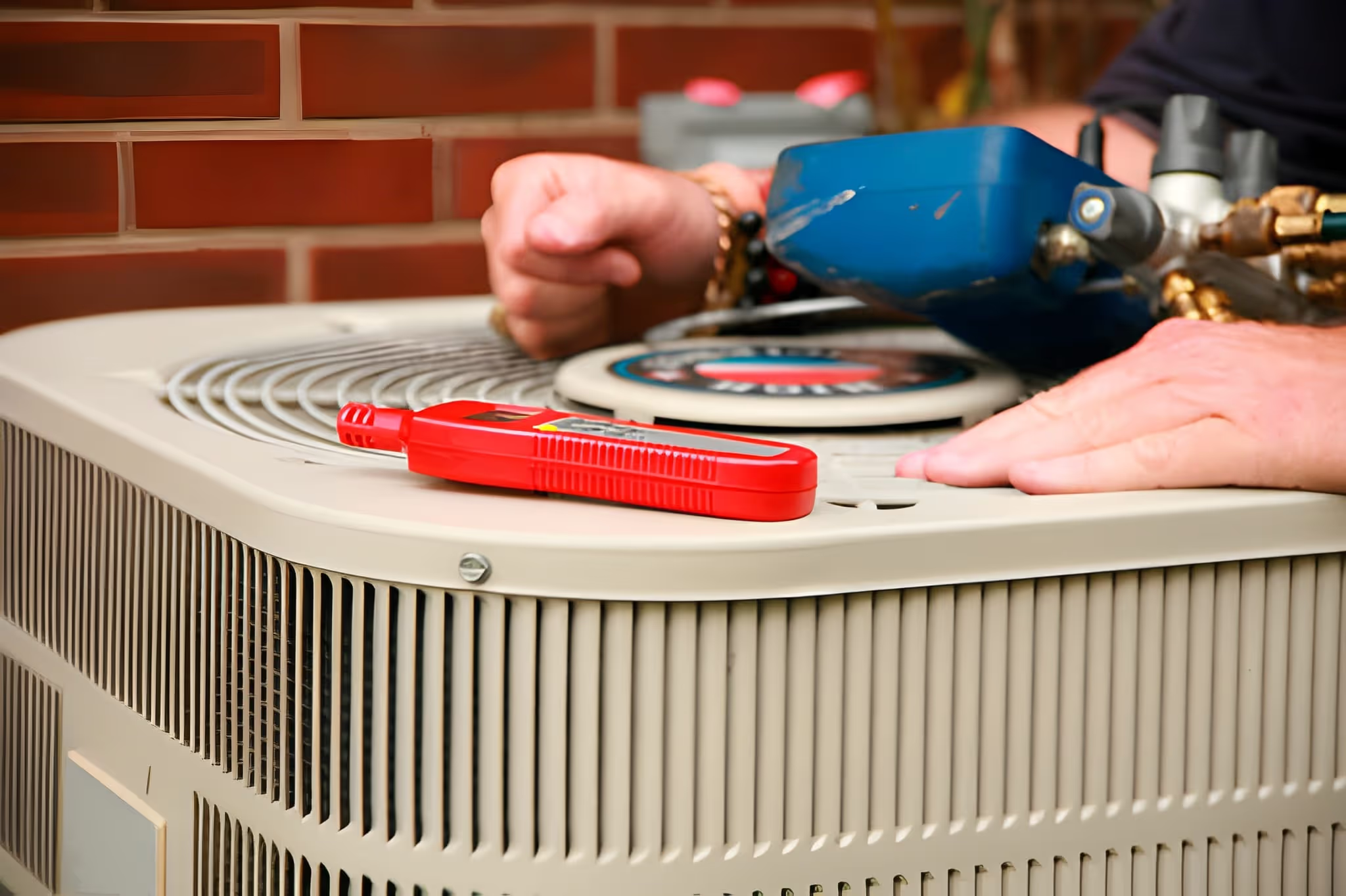
- Ideal Use Case: A home with a properly sized and sealed ductwork system where a whole-home solution is the most practical choice. Paired with a robust HVAC maintenance services plan, they provide reliable, efficient comfort.
Frequently Asked Questions
- Q: Is it worth paying more for a higher SEER rating?
It depends. The jump from a SEER 14 to a SEER 16 unit can save you hundreds of dollars over the unit's lifespan. However, that investment is completely wasted if it’s not paired with a proper load calculation and sealed ductwork. Prioritize system design first, then get the highest SEER rating your budget comfortably allows. - Q: My current ductwork is old. Can I still install a high-efficiency system?
Absolutely, but the ductwork needs to be addressed first. We would perform an inspection to test for leakage and assess the design. In many cases, we can significantly improve performance by sealing existing ducts and making targeted modifications. This step is crucial to unlocking the efficiency of your new unit. - Q: How do things like smart thermostats and zoning systems fit in?
These are excellent tools for optimizing your system's performance. A smart thermostat learns your schedule to reduce energy use when you’re away, while a zoning system uses dampers in your ductwork to direct air only to the rooms you’re using. Both are powerful additions to a well-designed HVAC system, but they can't fix underlying problems like an oversized unit or leaky ducts.
Your Blueprint for an Efficient Home
Choosing a new HVAC system is a major investment in your home's comfort and value. By focusing on the fundamentals of system design—a professional load calculation, efficient ductwork, and proper ventilation— you ensure that whichever equipment you choose can perform at its absolute peak.
This approach transforms your purchase from a simple appliance replacement into a long-term strategy for energy savings and superior comfort.
Ready to create a blueprint for your home's peak performance? Our team at Central Air Solutions is here to help. We don’t just sell boxes; we design comprehensive comfort systems tailored to your home and family. Contact us today for a free, no-obligation consultation and experience the difference that expert design can make.